Showing posts with label Survival. Show all posts

Tuesday, 3 February 2015

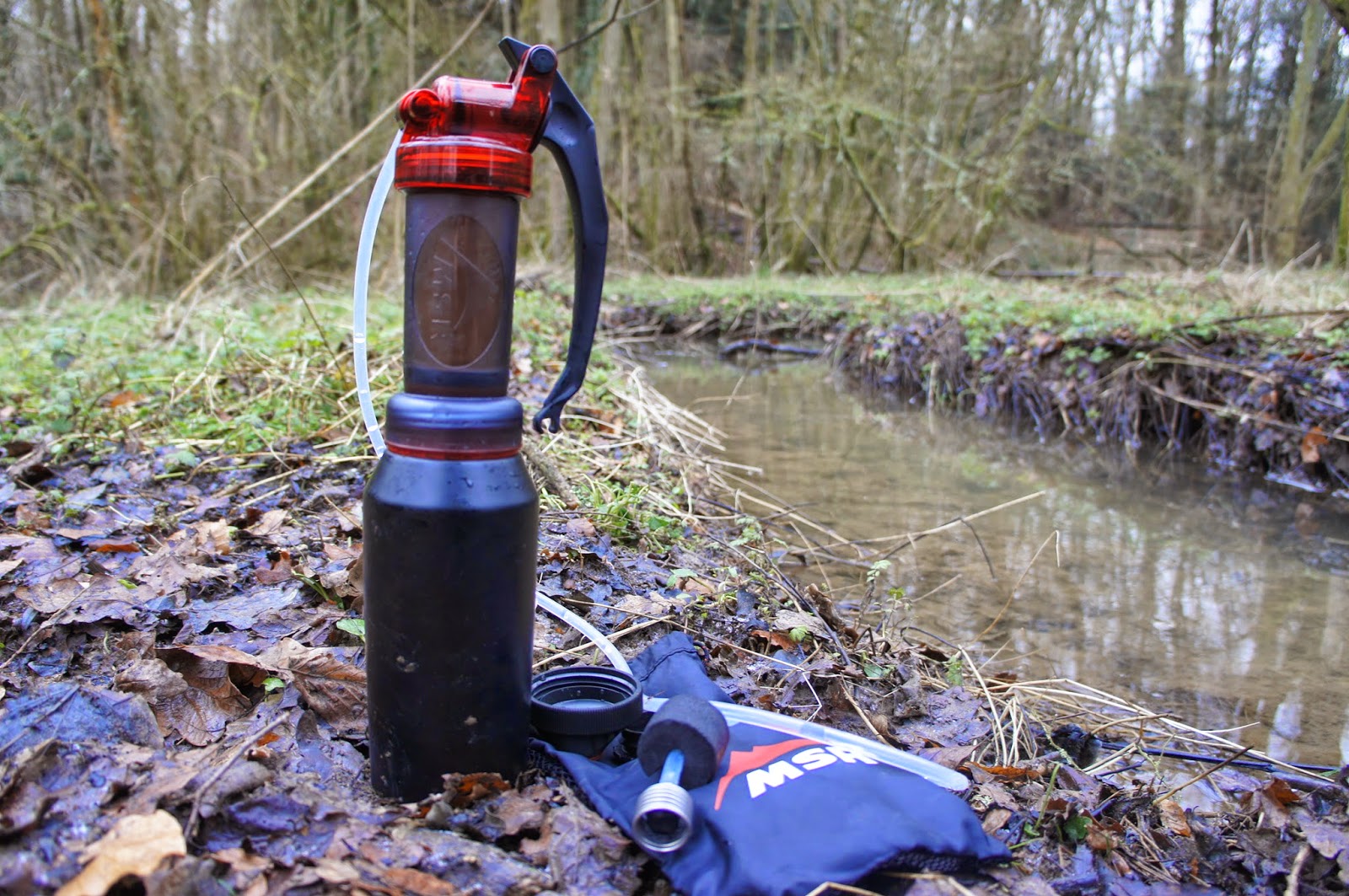
Review: MSR Miniworks EX water filter


I’ve covered a fair few wild edibles in the past on this blog and where as I do enjoy going out collecting these plants I usually take them home to cook in a “normal” kitchen with taps. 

I wanted to talk today about stripping things back a little and heading more in a survival / wild camping direction. At the right time of year I don’t think I’d have much trouble surviving for a few days, even a week or two foraging for my sustenance however clean water would always be a bit of a worry and carrying 2 litres for each day I would be out would be rather weighty. Things to be concerned about when collecting water are chemicals, toxins ,pesticides, bacteria, protozoa, cryptosporidium and waterbourne viruses. This is where the MSR Miniworks EX comes in.


The Miniworks has a replaceable carbon ceramic filter, good for 2000 litres and with 0.2 micron filter size will get rid of all of the above apart from the viruses. For the viruses I’d suggest a using a chlorine tablet after you have filtered the water and if you are not a fan of the flavour, filtering the clean water through the Miniworks again should remove most of the pool water taste. 

Weighing in at 16oz / 450 grams some say that it is a little on the heavy side but when you think about it, it is only a quarter of the weight of your daily water needs. The Miniworks is completely field maintainable needing no tools to take it apart and just a little 3M scrubbing pad to clean the filter. On the base of the Miniworks there is a little red calliper which when able to fit over the removed filter indicates that its time to replace it. Replacement filters cost around the £40 mark but you do occasionally see them cheaper. 


The filter is operated by a hand pump which includes an Airspring Accumulator and when completely clean will deliver a flow rate of a litre a minute. It is ideally suited to the MSR Alpine 1 ltr bottle which will screw straight onto the bottom of the Miniworks. Together you have a great little set up to extend your adventure time in the wild, keep you and small group hydrated and at £77 from Webtogs won’t break the bank!


When compared to its rival the Katadyn Hiker Pro which comes in at around the same price with a similar cost for the replacement filter I would certain chose the MSR over the Katadyn as the latter filter is only good for 900 litres so less than half that of the MSR.

For more reviews like this why not check out Outdoor Gear Review 


Thursday, 20 March 2014

Pyro Piston - Ancient Technology, 21st Century Reliability

History:

Fire Pistons have been around for thousands of years and have been used by many tribes in the Pacific Islands and South East Asia. Evidence suggests that tribes that used blowpipes as a weapon originally came up with the idea. Of course we in the West like to claim these things for ourselves and our first mention of this type of tool came in 1745 when Abbe Augustin Ruffo “invented” it.  Some time after that in the early 1800’s it was patented and remained an incredibly popular house hold fire lighting device until some bright spark, Gustaf Erik Pasch invented the safety match in the mid 1800’s. The fire piston is also said to be the inspiration for Rudolf Diesels creation of the Diesel Engine in 1892.

How it works:

The fire piston works by rapidly compressing gas around the tinder at the end of the plunger. If this is done correctly the gas will heat up sharply to around 260°C. This is enough to ignite the tinder, and transfer it to a larger set of tinder for fire lighting. This is best demonstrated by Dustin in the video below.


How to:

Step One: Get a little of the lubricant on your finger and smear it on the washer. Push the piston in and out a couple of times. If it’s well lubricated, the piston will spring back due the compression created.

Step Two: Take a little tinder and press it into the tinder cup ensuring it sits firmly within the cup and if not touching the washer. If it is not in properly it will interfere with the washer meaning you’ll loose much needed compression.

Step Three: Insert the piston into the piston body about 1cm. Place the piston on a solid surface. Strike downwards with force then quickly remove the piston to reveal the glowing ember.

Step Four: Transfer the ember to larger pieces of tinder and gently blow until you get flames.

Moving Forward:

Dustin James at Bushcraft Tools has bought this ancient design right up to date with the Pyro Piston. Dustin’s idea came from his work with the Shelter Box charity which provide emergency shelter, supplies and support for communities around the world hit by disaster and humanitarian crisis. He wanted to make a sure-fire way of creating fire time and time again in these areas.  After years of research, development and many incarnations of his creation we are left with probably the best fire piston on the market.


Pyro Piston Review:

The Pyro Piston comes with everything you need to get a burning ember to light your fire. The kit includes a 1 Pyro-Piston, Built-in 64mm Firesteel, Charcloth, Lubricant  and Spare rubber washers. It weighs in at 80g and is 117mm long by 22mm wide.


The clever thing about the Pyro Piston is the way everything is incorporated into its design. One end of the two piece piston unscrews to reveal a small area where the lubricant is kept, the opposite end has a similar sized water proof compartment for keeping tinder. If that wasn’t enough there is a fire steel cleverly placed in the centre of the piston which can be found by unscrewing the tinder cup. I love this bit of design, to have two ways of making a fire in one device essentially giving you twice the chance to light a fire in the wilderness.

I hear Dustin has some pretty sweet upgrades in development too so keep an eye on him!