Saturday, 9 February 2013

Allotment Dinners ON TOUR


I believe the usual adage is something akin to ‘WHAT GOES ON TOUR STAYS ON TOUR’. Not in our case. That would be highly frustrating and this post would end here.  So for the purposes of public interest, I will cast that age old instruction aside and divulge every gory detail of our latest adventure in the world of outside dining. 


You may remember a chap called Dave who visited our allotment dinners patch a couple of months ago and generously wrote us a guest post of his experience with us – well this is where the favour is gladly re-payed.  Dave lives in a lovely spot in Ardingly in a house built by his great grandfather’s very own hands using the scraps left over from constructing the beautiful Nymans in Handcross.  I love this story.  I oft romanticise over the notion of building ones own house.  I love that he also built lots of the other houses in the lane and his son, Dave’s Grandfather, built another house just next to his using the skills passed down to him but in a completely different style.  I love I was told this story in a construction Dave had created, to suit his own needs of being outside.  It’s a lovely wooden structure comprised of sturdy stone posts and a roof of  mainly hazel.  Generations of building skill on one parcel of land, each so different but each so wonderful. 


We sat happily on benches beneath the snow melting drips of the roof in front of a roaring fire – all welcome comforts after James had told me on route there was nowhere for us to sit and did I have a carrier bag he could borrow so his bum didn’t get wet when sitting on the floor. 

Dave had stoked up the clay oven a fair few hours before our arrival to get the heat up to optimum cooking temperature and had prepared the starter some days earlier I believe.  He’s so Blue Peter, we were already miles apart from mine and James’ usual last minute cobbling together of dinners. 


So, first up: Potted shrimp with lightly toasted ciabatta.  A previously unknown delicacy to my taste buds but what a happy new entrant it was.  This dish is served in small pots, the type you’d serve dry roasted peanuts in for nibbles in the 90’s.  The paprika flavoured shrimp is packed into the bottom of the dish and topped with clarified butter which has set to quite a mean consistency.  Sealing dishes in this way was one of the few methods our pre freezer ancestors had of enabling the preservation of meats and fish for many weeks.  Clarifying – the heating and filtering of butter – removes the proteins which could potentially go rancid and creates a thicker set seal.  Well, there was nothing rancid about this.  It was devoured in moments, much to the disappointment of the two canine guests.   


A pause between courses and time then to introduce all of the guests present that evening. Me and James you know, Dave and his lovely girlfriend Alice and two dogs Archie - alice’s mums, and Hattie – my mum’s puppy.  Whenever dogs are present conversation tends to centre round them, how old they are, japes they may get up to, how muddy they are, how they’re not usually this mental.  Not unlike parents with kids I should imagine, just with leads.  James did manage to steer conversation away with a long tale of a known fraudster getting into a right pickle with his company and how he was managing the situation without giving on that he'd read the Daily Mail and knew exactly who she was and no she was not going to get the better of him, so there.  Interesting yarn but after a short silence – ‘so where do you walk him?’   


Next course:  Wildfood Pizza’s.  These home made pizza’s were topped with pigeon, pheasant (some roadkill defrosted from james’ freezer) and bacon alongside the usual suspects, mozzarella and tomato.  Bacon often features alongside these two meats to provide some much needed fat.  They were all lightly fried off together on James’ skillet over the fire and added to the pizzas for a last minute firing.  Absolutely glorious.  To accompany was Hairy Bittercress pesto and a wild rocket salad.  Alice, not a meat eater, joined us with her many cheese pizza and helpfully held my dog whilst I ate.   

Now this is where things got hairy – and I’m not talking about the pesto.  The perils of bringing two dogs together in the night, surrounding them with nice smells and expecting them to behave came very suddenly to light.  One moment we were appreciating a gobful of game, the next a ferocious roar (well, I say ferocious - he’s a jack Russell) and the yelps of the cheeky pup who ordained to go near his eagerly awaited food scraps.  It was horrendous.  A full blown dog attack/mild scuffle (depending on your experience of these events, mine is none so i’m opting for the former) happening right under our feet.  I have never had that happen before and for the entire time I was looking after my mums dog, was the thing I had dreaded happening most.  For Archie, it was completely out of character, it is normally him getting mauled by his long term dog wife Matilda.  I’m still not entirely sure how it ended, I'd leaped up shouting Oh my God, and couldn’t bare to look – not massively helpful.  What I do know is that I got Hattie’s lead back in my hands and after a horrible moment of thinking the mud she was covered in was blood, managed to sit back down and get my shaking hands back on another slice of pizza.  Archie had been unceremoniously removed from the scene, disgraced and no doubt still a bit peckish.  Now this is what I’d call awkward.  When neither of you actually owns either dog, and then one has a go at the other, well there's not much you can say other than profusely apologise and hope no-one sues.  But then that’s dogs isn’t it.  Not really much like kids at all actually. 


By the third and final course my dog had been put in the van and Archie had returned, although still spurned, to witness us scoff down Honey Buns which I had made the night before.  They’re lovely little things and very easy to make. The recipe is Stephen Fry’s and found in the ‘Essential Scout campfire cook book’ tweaked only slightly by me with the addition of cinnamon.  I’d recommend seeking it out, there are many great recipes in there for the outdoor inclined cook. 

The evening, cut slightly shorter than it may have naturally ended due to fears of dog welfare, was overall, a grand evening.  It was such a treat to do ‘our thing’ somewhere else and be so wonderfully welcomed.  And what’s an evening without a spot of drama anyway. 

Thank you to Dave, Alice and Archie (hopefully now allowed back in the house), we’d love to come back please.  Without the dog. 


Monday, 28 January 2013

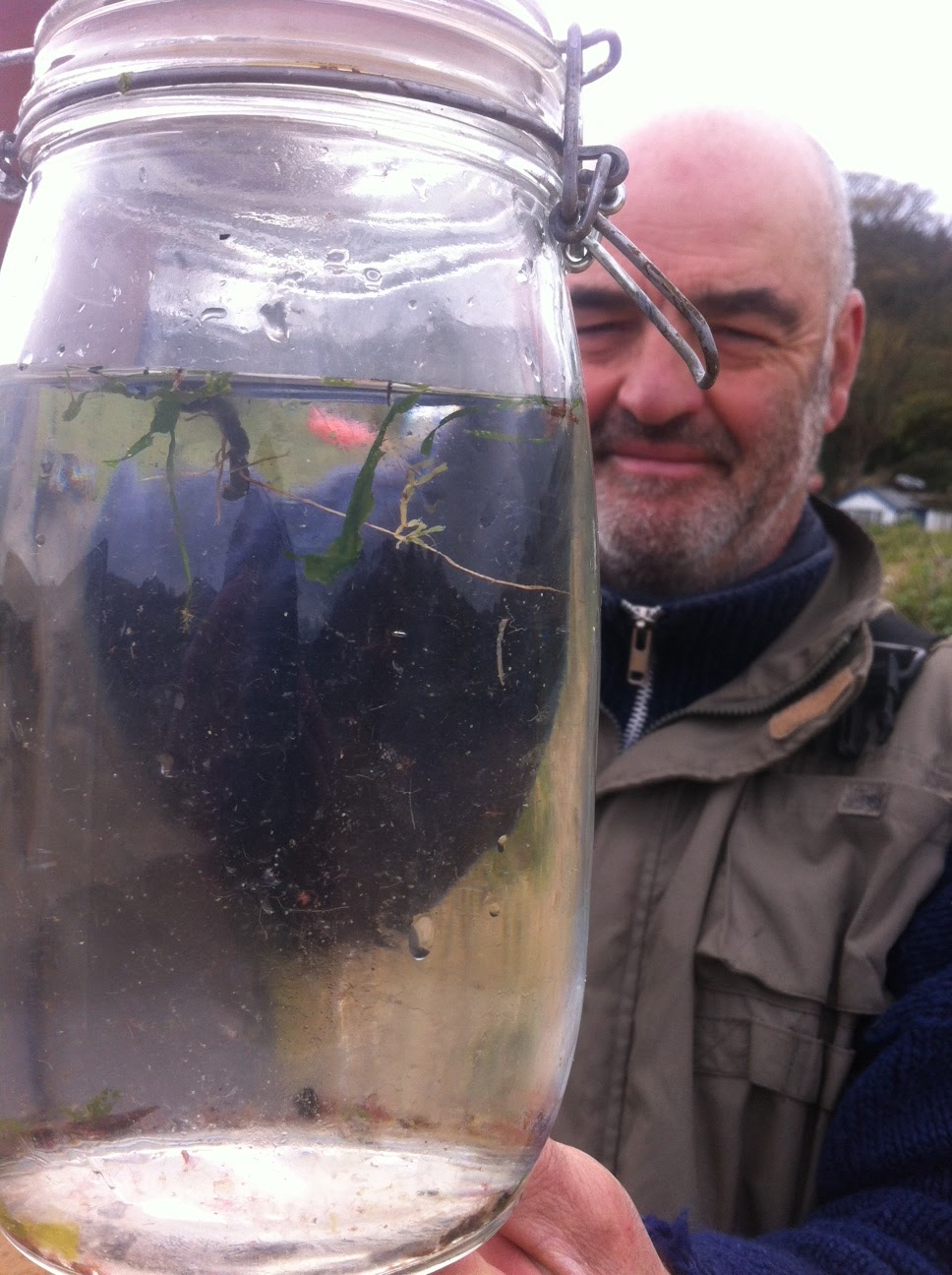
An Insight into Coastal Foraging with Falassa

Falassa is my name. I have the first licence - experimental as it is - in England to harvest commercially attached macroscopic algae (sea weed/veg) in England.


My concern is marine ecology and the ability of coastal communities to develop economic/social sustainability. 

Down here in the west of Cornwall it is said that if you have only three jobs you are unemployed. A bit of fishing maybe, some chippie work, missus off to clean holiday lets...if you are real unlucky missus gets to do care work...if you are real real unlucky you get to do the care work.


Enough! The mackerel are headed north-westwards into the welcoming and deathly embrace of Faro-ese nets. Rain comes down with incessant regularity to drown our vegetables in the summer. Half of Cornwall is seeded with spuds which, shrouded by phosphorescant blue poison tablets, are destined for Leicester and Walker’s Chrisp Factory – then return.


And then folk watch the sainted Hugh on TV and come down and overturn rocks for crabs, hack away at the marsh samphire and burrow for cockles. Prince Fuckwit owns the manorial rights to the shellfish, Lord ffffVyvian owns God knows what…


In the bay self-styled eco-fishermen hang the delightfully termed tangle-nets in the bay (catch everything) and there is vague talk about banning fish discards. A hungry man never discards, but we are not hungry – so we discard.


Hunting sea-veg for the kitchen is a bit of a conceptual long shot. Easy maybe to understand that it’s better to be vegetarian on the basis that a steak takes three times its volume of plants to make itself. But how do I get across the message that it’s better to eat the seaweed than the carrots that are so enthusiastically covered in storm-cast algae?


Anyhows…just let’s start with the idea that plants grow in the sea whatever the weather conditions, that they soak up a complex array of minerals, nutrients, trace elements…and that the chemical processes of these plants then create proteins and sugars and this and that.


And all year round…whilst in January we might just have nettles on-shore, below the shore line are plants full of goodness and culinary intrigue. Their bed-mates are molluscs and bi-valves, at their best in the winter when they are not spawning. Ever tried a stir fry of kelp, pepper dulse and mussels?


I am trying to persuade the nation that sea plants are good to eat with nutritional/health benefits that are said to be stratospheric (there is a bundle of peer reviewed research around). Whisper it but quietly, but we do have our own super foods within reach – easy reach.


Except: it’s never that simple. As a seaweed harvester I am classified as a primary food producer. This means that I have to write a Food Safety Management System, establish Critical Control Points, have my premises (mother’s greenhouse) inspected, obtain landowners’ permission, undertake ecological impact reviews and…oh, I can’t remember now. Insurance or something.


Actually, it’s all fine, I am happy to comply and think my way through hygiene issues. And, I can tell you something simple: hand harvesting sea veg is arduous, dangerous, frustrating and yet…uplifting. It’s not an easy buck, but who wouldn’t be up to their waste in water in an almost lunar rock landscape on a forgotten stretch of Cornish coastline?

I am getting on in years now, probably happiest building boats but I can now combine boat-building and sea veg harvesting. Lessons are being learnt the hard way, and I want to pass on my knowledge.


So this year I will be running some events on my bit of hidden coast, maybe even setting up a training course with a ticket at the end. Sea plants are curious, weird, complex creatures, little understood. I love them, an d always say a little ancient  Scottish prayer before cutting:


May the glory of the sea be thine
May the glory of the earth be thine
And may the glory of heaven be thine


When you get to pick some marine algae, remember to nibble them first, cut lightly (a third of the plant half way up) with scissors and avoid busy beaches. Dry the leaves in the sun, then pack away.


More information on courses and holidays at www.falassa.co.uk


Thursday, 13 December 2012

Write For Us


Write for us
We are looking for guest authors to submit high quality guest posts to Forage Sussex. We are looking for authors to write about wild food, adventures in the wild or Outdoor gear and gadgets reviews, no spun content, writing submitted should be unique (we always check!)
Requirements:
  • Minimum of 600 words
  • Must be written in good English
  • Article must be related to wild food, hunting, and adventuring.
  • If you are a company looking for a product to be promoted in the gear and gadgets section I would be happy to review it for you.
  • If your guest post gets published you must help to promote via social media
  • One link back to your site in the author bio. Site must be relevant to travel, food or outdoor gear.

If you are interested in writing for Forage Sussex then contact us with your topic idea, a bit about yourself and links to your website, blog and social media accounts. The title of the email should read Article Pitch: followed by your topic idea. We look forward to hearing from you.

Wednesday, 28 November 2012

Hedgehog Wild Mushroom Risotto - No hedgehogs were harmed!


Hedgehog Fungus Risotto


So I hope you’ve had a good read of my previous post on the dangers of mushroom picking now it’s on to the best part, the eating!


Whilst out with Archie yesterday I came across a sizable patch of Hedgehog Fungus, immediately recognising the spiny underside of the mushroom and having tried a few before I decided it was time to rustle up a tasty mushroom risotto. I gathered as many of the smaller ones as I could as the larger they are the more bitter they can taste and set off back home to get cooking.


Archie overseeing the mushroom collection.

Hedgehog Wild Mushroom Risotto.


Serves 2


A few knobs of butter
1 small shallot, finely chopped
1 clove of garlic, finely chopped

1 small hand full of dried Porcini, soaked in a little boiling water

1 small hand full of dried Horn of plenty, soaked in a little boiling water
300g Hedgehog Fungus, brushed clean and thickly sliced
130g Carnaroli risotto rice
A glass of white wine
500ml chicken or vegetable stock
A small handful Parmesan, grated
A small handful of parsley, chopped

Squeeze of lemon
Salt and pepper


Melt a couple of knobs of butter in a heavy bottomed pan and on a low heat soften the chopped shallot adding the garlic after a couple of minutes adding a pinch of salt.

Strain the dried mushrooms adding half the water from each to the stock which should be gently simmering away by now.


Add the Porcini, Horn of Plenty and Hedgehogs along with a little salt and pepper to the pan, give them a good stir and continue to cook on a low heat until they have softened a little.


Turn up the heat slightly and add the Carnaroli giving it a good stir again, after about a minute add the wine and stir until the rice has absorbed it.


Wild Mushroom Risotto the finished article.

Add the first ladle of stock, simmer and stir regularly until almost absorbed then repeat for around 10 minutes. At this point you should see the sauce forming and it a good time to check the seasoning and adjust as you wish. Continue adding the stock and stirring until the rice is cooked to your pleasing, there should still be a little bite in the rice if it is done properly.


Add another knob of butter, the Parmesan and chopped the parsley and give it a final big stir.


Serve with a little squeeze of lemon over it and there you have it, a gorgeous rich flavourful wild mushroom risotto. Enjoy!

Beginner Level Mushroom Foraging – Hedgehog Fungus


I’ve written this short article because I’m going to post a recipe for a wild mushroom risotto and don’t want anyone to go out and do themselves any harm. Please read it carefully!

I once heard a fellow forager say that in the school of learning wild food, mushrooms are very much in the advanced level, A level if you will. There are literally tens of thousands of types of mushroom and fungus out there with less than 1% being edible. For that reason I would say never eat any mushroom until you are not 100% certain of what it is. With the alternative being death or a life of kidney dialysis I’m sure you can see where I’m coming from. There are horror stories coming out quite regularly about people consuming poisons mushrooms and they never end well.  This article should not be used for identification purposes; a book or app such as Rogers Mushrooms will go along way to helping you with any identification but again I would say be very very careful. 

Archie with a Hedgehog Fungus


 If that hasn’t put you off completely then the best one to start with is the Hedgehog Fungus also called the Wood Hedgehog, Sweet Tooth, Pigs Trotter, Wood Urchin, Pied de Mouton (Sheep’s foot) in French or Hydnum repandum by its official name. The reason this is the best one to start with is that it is one of the easiest to identify with spikey tooth like structures where you would expect to find the gills on a normal shop bought mushroom. They are cream white in colour sometimes tan, grow to 5-15cm tall and can usually be found in mixed woodland although I usually find mine in coniferous areas.  They have a nutty flavour and a firm texture even when cooked. Older examples can taste a little bitter but a long cook can usually rid them of this. The only similar non-edible mushroom it could be confused with is the Sarcodon scabrosus so it’s a great one to start with!


Four Hedgehog Fungus in situ

Monday, 12 November 2012

Beetroot Carpaccio, Sussex Cheese and Hairy Bittercress

-->
Simple and Seasonal.

Beetroot Carpaccio with Slip Cote Cheese, Hairy bittercress and Lemon Oil Dressing.

Serves 4

3 Small Beetroot or 1 Pack of cooked beetroot

200g of Slip Cote cheese or 200g creamy sheep or goats cheese.

A couple of handfuls of Hairy bittercress, washed.

Zest of one lemon as finely grated as possible

3 Tbsp of Extra Virgin Olive Oil

100ml Cider Vinegar

Combine the olive oil and the zest and leave for an hour or so to get the flavours going. Steam the beetroot adding the vinegar to the water for about 30 minutes until soft and leave to cool. Rub the skin off or peel it if you want to avoid purple hands. Very thinly slice the Beetroot and arrange on the plates, crumble over the cheese, sprinkle over the Hairy bittercress, drizzle the dressing and season with a little salt. Enjoy.

Thursday, 8 November 2012

Saltmarsh Lamb, Wild Herbs, Samphire and Purslane


Saltmarsh Lamb, Purslane Crisps and a Samphire Kale and Blue Cheese Rockefeller.

A few months ago I was approached to enter a TV cookery competition the name of which I am currently not allowed to disclose. Having spoken briefly with a researcher about the type of recipe they where after I went off completely half cocked and created this tasty little number only to find out I couldn’t actually make it to the heats in the first place!


I wanted to have as many foraged ingredients in there as possible all within a close locality to one another. The area I had in mind was Alfriston and the tidal area of the Cuckmere river. I’d mulled over using mullet from the river but due to my massive lack of fishing skills I decided to give that a miss.

Whilst out and about collecting some samphire and a purslane, the idea came to me, Saltmarsh Lamb! A Saltmarsh lamb feeds on the purslane and samphire too so the flavours have a natural affinity with each other and having recently used the Hunter Gather Cook recipe for a Wild Herb Rub to make some great tasting lamb things were definitely coming together.

Having decided to do purslane crisps, and a Blue Cheese Rockefeller I started looking for a local blue cheese (to keep it Sussex!) in replacement for the Roquefort I’d initially thought would work best. Turns out this was much harder than I originally thought, even with the help of some of my cheese officiando friends, I was at a loss. But then I stumbled across the High Weald Dairy cheese company only a few miles from me, on the off chance I gave them a call and as it turns out they had a “prototype” Roquefort type Sussex blue in development. Mark at High Weald was nice enough to give me a tester piece to experiment with and this recipe was good to go!


Lamb with a HGC Ground Ivy Rub
2 French trimmed racks of Saltmarsh Lamb
For the Groud Ivy Rub:
  • Hand full of Ground ivy (dried)
  • Hand full of Mint (dried)
  • Hand full of Oxeye daisy leave (dried)
  • Pine needles (Fresh and finely chopped)
  • 2 cloves of Garlic (finely chopped and briefly oven dried)
  • Zest of 3 Lemons (briefly oven dried)
  • Salt & Pepper
  • Sugar
Remove the stalks, finely chop or blend all the ingredients and combine to make the rub.
Rub the racks of lamb all over with the mixture then place in a ziplock bag pour in a few glugs of olive oil and give it a little shake to get the oil over the lamb. Refrigerate over night or as long as you can. Remove the lamb from the fridge at least 2 hours before cooking.
Preheat oven to Gas Mark 4/400 degrees. Score the fat side to the lamb and season, wrap foil around the exposed ribs to stop them burning. Place on a baking tray fat side up.
Roast at Gas Mark 4 for 7 minutes then drop the temperature to Gas Mark 3 for a further 7 -15 minutes or until a meat thermometer reads 130 degrees in the thickest park of the meat.
Remove from the oven and rest for 7-10minutes cover with foil. Cut into chops and serve 3-4 a person. 
Samphire and Kale Blue Cheese Rockerfeller.
250g Kale Finely chopped
1 Handful of breadcrumbs
1 Egg Beaten
1 small Onion finely chopped
30g Butter
50g Sussex Blue Cheese from the
1 large tbsp of pickled Samphire roughly chopped.
2 Gloves of Garlic Finely chopped
2 Sprigs of fresh thyme or 1 Tsp dried thyme
Salt and ground pepper to season.
Couple of pinches of garlic salt
1 Beef tomato sliced in 2 cm thick.

Directions:

1. Boil the Kale for a few minutes and strain thoroughly.

2. Place the breadcrumbs, kale, onion, eggs, melted butter, blue cheese, pickled samphire, thyme, garlic, salt and pepper and stir well to blend the ingredients.

3. In a buttered ramekin (1 per person) place one slice of tomato and sprinkle a little garlic salt.  Spoon in the Kale mixture to fill the ramekins.

Bake at Gas Mark 4/ 350 degrees for 15-20 minutes

Purslane Crisps :

2 Handfuls of Purslane leaves, stalks removed
100g of Bread crumbs well seasoned with salt and pepper
1 egg beaten
1 small amount of flour
Vegetable oil.

Dip each leaf in the flour then egg then breadcrumbs and fry in the vegetable oil for a few seconds until golden, remove from pan and on to some kitchen towel to get rid of any excess oil.

Put it all together and there you go! Sorry there's no pictures of the actual dish, hope you like the others. Enjoy!